Wood-based materials
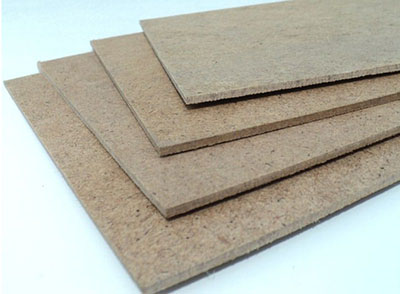
Fibreboards made of defibrated and felted wood fibers obtained from inferior species of wood and wood waste (top wood, branch, cuts, firewood, cut-offs, etc.). Fibreboards are produced in various grades and sizes as well as with different hardness. So we have porous plates (soft), semi-hard, hard and so-called. very hard; saturated with impregnating agents and not saturated; thin and thick (from 5 do 32 mm), resistant to moisture and fungus and not resistant; light and dark; about the width of the sheet 1220 mm and length 5500 mm.
The use of individual types of boards is very wide. Soft boards are used, for example, for thermal and acoustic insulation in apartments, offices, production plants, concert halls and theaters, because they are bad heat conductors and excellent sound absorbers.
Semi-hard plates, hard and very hard are used to build wagons, car bodies, holiday homes, furniture, equipment, boats etc.. These boards can be painted with oil paints, varnish and polish. You should remember this, that the painting of fibreboards should be two-sided. In this way, we counteract the bending of the panel painted on one side (due to moisture absorption) toward the painted side.
In addition to fibreboards, chaff boards are also produced from flax straw waste. However, they are rarely used in the practice of DIY enthusiasts, due to the release of free formaldehyde – an extremely harmful chemical compound.
Laminated wood is made of thin veneers, saturated or coated with thermosetting adhesives and pressed under high pressure at elevated temperature. This wood is called lignofol and has a different arrangement of fibers in adjacent veneers. It is much heavier and harder than natural wood, but also much more durable and durable than it (for bending, turning, compression, etc.); it doesn't wear off so quickly, it does not dry out and does not soak up water. This wood is used, among other things, to build gears, bearings, guides, weaving shuttles, water fleet and sports equipment. It is hard to come by, because it is not in retail.
Utility waste. When discussing wood materials, it is impossible to ignore the closely related issue of wood waste and their rational use. This issue is extremely important not only for the domestic resource management, but also for every home workshop, producing utility items from wood, where you can profitably use any waste instead of full-value wood – even for financial reasons.
Be aware of this, that wood as a raw material is very heterogeneous – both in terms of internal construction, as well as technical properties. Its suitability for various purposes is therefore limited. It turns out, that of the total amount of wood cut in the forest only 30-40% is processed, and much of the rest turns to waste. Means, that on 3 Only one of the felled trees reaches recipients in the form of finished products. Therefore, it becomes important to prevent waste generation by more thoughtful and appropriate selection of raw materials for specific purposes.
Taking into account the types of waste, we divide it into waste generated during logging and their processing in the forest, and waste generated during mechanical and manual wood processing. (in sawmills, carpentry shops, plywood factories etc.). The latter is normal or normal waste as opposed to others, resulting from faulty wood processing or improper storage.
Large and medium waste can be mechanically processed into various smaller parts of furniture or equipment, for wood accessories, household items, AIDS, models etc..
Small waste is used in the wood and chemical industries (for the manufacture of cellulose, fibreboard and plastic). They can and should also be widely used by DIY enthusiasts instead of wholesome materials, much more expensive and often unavailable in retail.
We should strive to rationally use even the smallest pieces of wood, which can be widely used in home DIY; in this case, we do not care about the processing time, which, for example, for trades and industry is essential in cost calculation.
by marcin

Category: Information
Tags: veneers (forniry), furniture blockboards, plywood, chipboard and fibreboard