Wooden house – Common room
Wooden house – Common room
Increasingly popular interest in the rational use of free time, individually or collectively, gives rise to the need to build many new private and company houses (pavilions) recreational, day rooms for sports clubs and youth organizations, changing rooms at sports fields, boat storage hangars etc.. Below – in the next few articles - stated, How can all these types of facilities be built cheaply and using available materials?. The basis of the construction system presented here is the easy-to-perform foundation of structures on piles – the houses have no basement and no foundation, and they are assembled from panels, which you can make yourself in the basement in winter, in a garage or shed, and in summer transport to the construction site and then quickly and easily assemble the designed object from them.
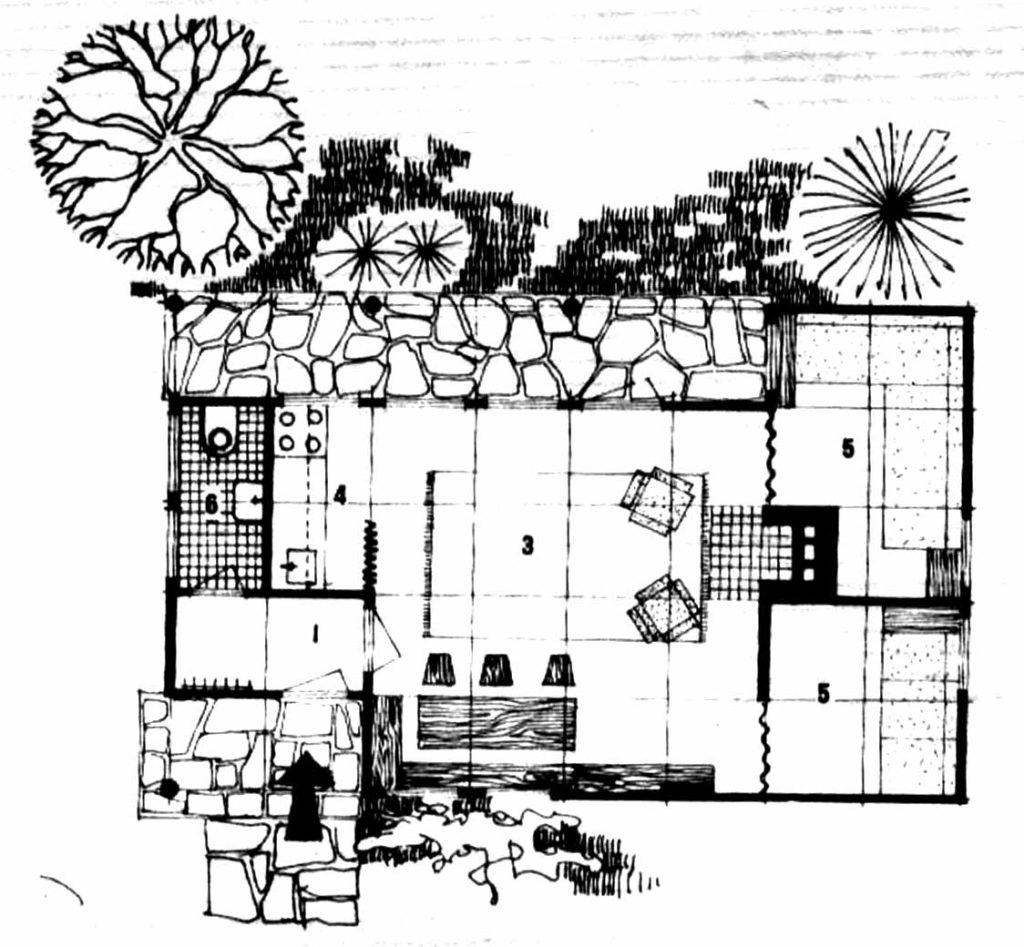
An example of a summer house with two sleeping corners
These plates are basically the same structure as these, recreational houses on sale are assembled from. The skeleton of the slab is a rectangular frame made of battens, usually 6 in diameter×8 cm. To the sides of the frame from the outside (facing) the wood-based sheathing is nailed with galvanized nails (e.g. fibreboards) or wooden elements, e.g. okorków, waste boards, etc.. materials, which the builder of the house can buy most easily and cheaply. Between the frame and the sheathing, sand-free tar paper or plastic mattings are placed. Then, the inner sheathing is nailed to the inside of the board, also from such material, what is the most available. Here the choice is greater, because chipboard and chipboard are suitable for this purpose, plasterboards, soft fibreboards etc.. We provide insulation material between the outer and inner sheathing: mineral wool, slag (in the case of slag, cardboard is provided on the inside of the plate), insulating plates of foamed plastics, cork waste etc..
The door and window panels are made in the same way as the wall panels, except that the frames should be embedded in them (door frames) door or window, dimensions adapted to the size of doors and windows, what we have at our disposal.
The dimensions of full and door and window panels are selected in the following way, that their height should be at least 220 cm, and the width 100 do 120 cm. In practice, width is the most convenient 120 cm, because it allows any type of door and window to be embedded in the board, however, the availability and cost of the material will be decisive in each specific case, which may sometimes be smaller than the dimensions indicated above.
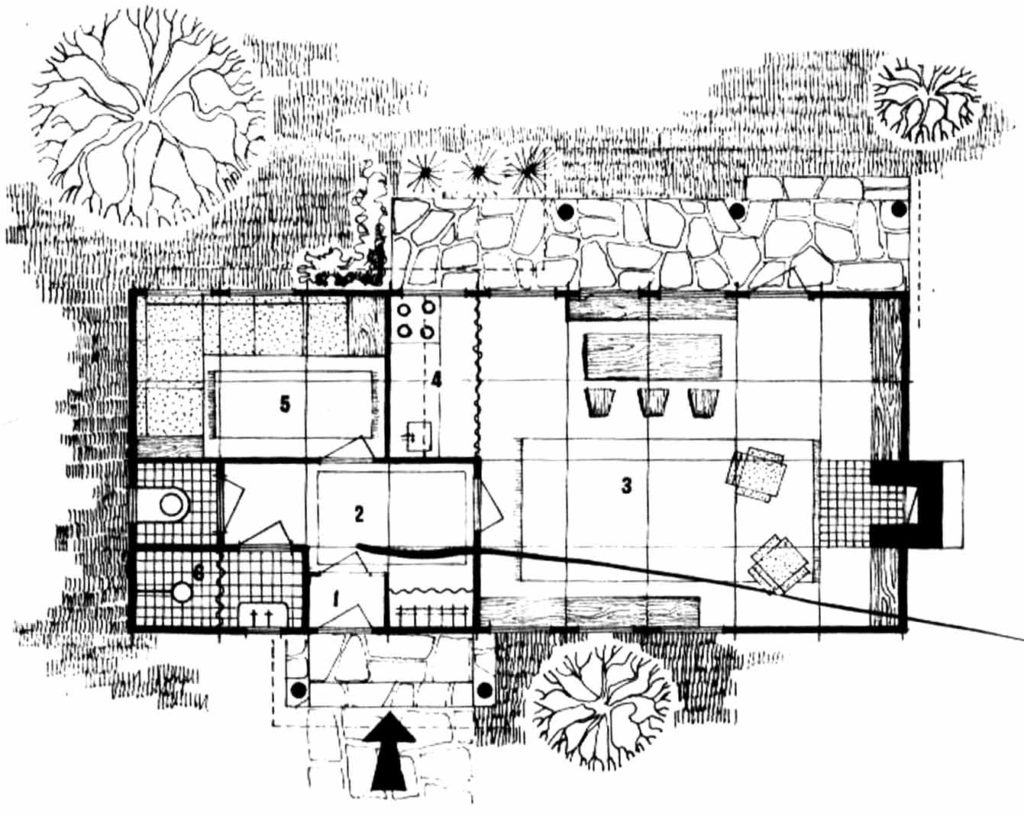
Example of a holiday home with two beds
The next element to be made is the roof truss, which is knocked off the boards. Roofing is also selected according to the possibility of purchasing available materials and possibly – when the type of coverage is reserved in a given area by the provisions of the requirements of the local building authority. Suitable materials for coverings are: sand-blasted papa, galvanized steel sheet, corrugated cement sheets or other cement roofing materials.
Internal partition walls are also made of boards constructed similarly to external wall boards, except that they do not have an insulating layer. We give the sheathing of these boards – from both sides – Material, which we use for the sheathing of external wall panels from the inside of the building (chipboard, chaff etc.). We will also use the same material for the soffit of the ceiling.
The floor is a frame fixed on piles, insulated from the bottom with mineral wool placed on hard fibreboards or cement boards, and the material constituting the floor itself. Usually it is made of boards with a thickness of at least 25 mm.
The construction of the facility in the manner described above is cheaper than its construction with the use of a traditional massive foundation and purchased ready-made assembly elements of the building.. The cost of an object is proportional to the cost of the material used and varies from case to case. With a lot of initiative and a bit of luck, you can even do 60% Obtain the necessary material from the demolition of old houses, from old packaging, crates etc.. In this case, the cost will be only a fraction of the cost of purchasing ready-made objects or their components (the retail price of the purchased holiday homes includes a high labor and material surcharge).
