Lightning protection
Lightning protection
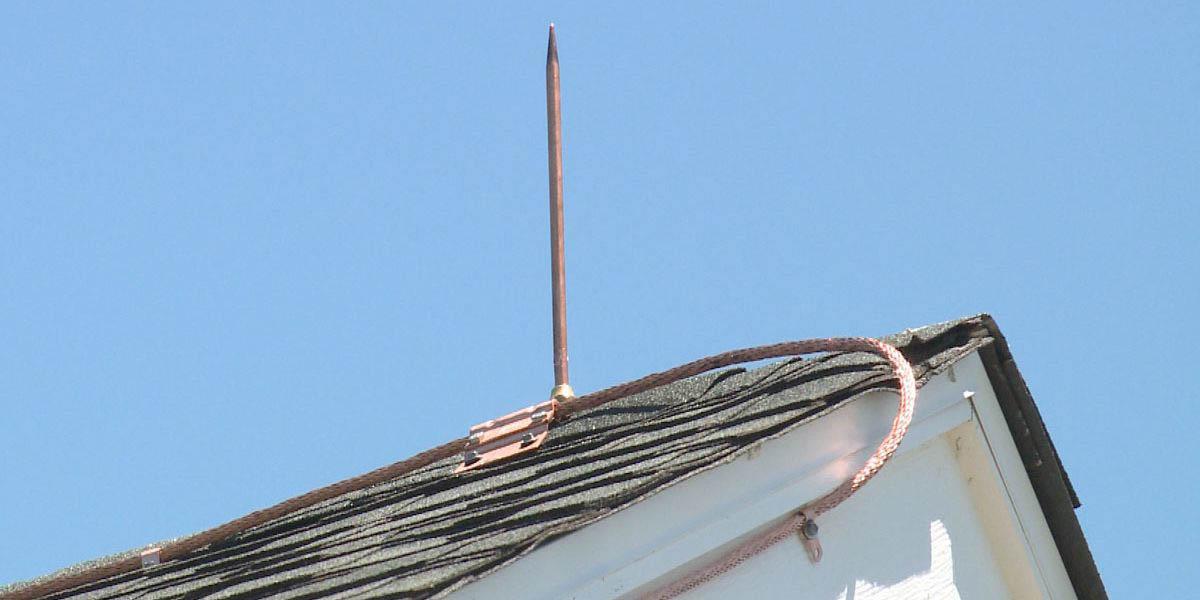
The lightning protection system, also known as the lightning protection system, is a device used to protect the building against the effects of lightning. (lightning bolts). Each installation consists of three main parts:
about feints – i.e.. cables directly receiving lightning discharges,
o conductors discharging discharges from air terminals to earth electrodes,
about earth electrodes – i.e.. cables buried in the ground for the safe discharge of the discharges to the ground.
The cables are connected with each other using galvanized screw connections, brass, copper or aluminum. The smallest permissible dimensions of the above-ground part of the lightning protection system are as follows:
o galvanized steel wire for connections inside the house with a cross-sectional diameter – 5 mm
o galvanized steel wire for connections outside the house with a cross-sectional diameter – 6 mm
o a galvanized steel rod for air terminals and discharge pipes on brick chimneys
cross-sectional diameter -16 mm o galvanized steel strip with a cross-section – 2,5 x 20 mm
o galvanized steel strip (for earth electrodes) with a cross section – 4 x 20 mm
o a copper wire with a cross-sectional diameter – 8 mm
o copper strip with a cross section – 2,5 x 20 mm
o a copper wire with a diameter of -7×3 mm
o aluminum wire with a cross-sectional diameter -10 mm
o aluminum tape with a cross-section – 4 x 20 mm
o steel or copper sheet used as thick lines – 0,5 mm
o aluminum sheet used as thicknesses -1,0 mm
o zinc plate used as thin lines – 0,5 mm
o downpipes, steel pipes and other metal structures used as part of the lightning protection device with a cross-sectional area – minimum 100 mm2
