Electric wires inside the cottage
CABLES INSIDE THE HOUSE
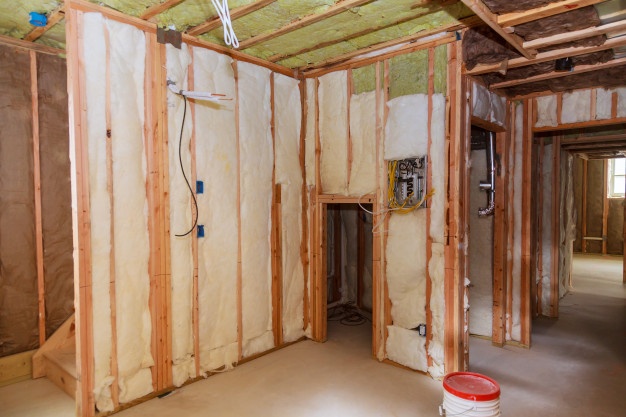
Wires are veins, i.e.. wires of copper or aluminum. They can be single wires or stranded wires. The wires are covered with a tight one insulating sheath, two, and even three or more layers. All copper wires, regardless of the type of insulation, have normalized sections. In summer cottage construction, we mainly use wires of the following sections:
o in bedside lamps – copper with a cross-sectional area 0,5-0,75 mm2;
about leading – copper with a cross-sectional area 1,1,5,2,5 mm2 or aluminum with a surface 1,5, 2,5 i 4,0 mm2.
Insulating tubes, in which we conduct electric cables, are made of polyvinyl chloride (PVC). We use them in places where cables pass through the construction elements of the house: walls, ceilings, vaults etc.. Plug sockets are used to connect cables of portable receivers (lamps, radio receivers etc.) with electrical installation placed in the walls. It is advisable to install plug sockets at a height 30 – 50 cm above the floor.
Fuses are used to protect cables and consumers against the flow of excessive electric current through them.
If we use wires:
o copper with a cross-sectional area 1,0 mm2 – the permissible line load is 10-14 A, and the rated current of the fuse is 6 A (we buy a fuse 6 A);
o copper with a cross-sectional area 1,5 mm2 – the permissible line load is 15-20 A, and the rated current of the fuse is 10 A (we buy a fuse 10 A);
o copper with a cross-sectional area 2,5 mm2 – the permissible line load is 21-27 A, and the rated current of the fuse is 15 A (we buy a fuse 15 A).
Insulating tape is used to protect the bare conductors of electrical cables against direct contact. The tape is made in discs and should be protected against moisture.
