Screed on underfloor heating
 Screed on underfloor heating
Underfloor heating is well suited, especially in the bathroom, to ensure a comfortable temperature of the floor surface. The heating pipes are completely covered with the screed and give their heat to the concrete, which accumulates them and transfers them to the floor surface. The heated screed must be particularly well insulated from below, so that it does not transfer heat to the ceiling structure and other rooms. Due to the high thermal load, special requirements are placed on the screed. Due to the alternating warming and cooling, it must constantly expand and contract, not cracking at the same time. The underfloor heating screed is thus essentially treated with admixtures, which appropriately improve the quality of concrete. Underfloor heating is often offered as a complete system, consisting of insulating material, release film, support system for heating pipes and screed conditioner, which is added to the mixing water. It is worth using this convenience because the manufacturer guarantees the quality and suitability of the screed improvement agent. If we buy different components of underfloor heating individually and install the system on our own, we can choose a commercially available mortar improvement agent, the use of which has been clearly specified by the manufacturer for this purpose.
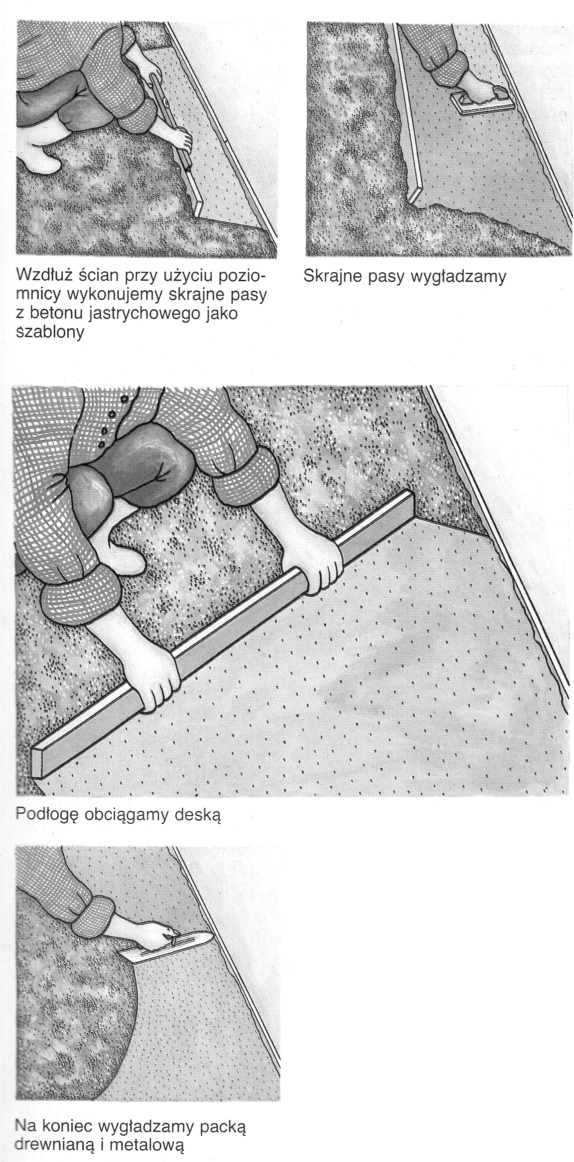
All systems that have been tried and tested in heated buildings are suitable for underfloor heating, whether, whether the heating pipes are made of copper or plastic. Place the pipes on the insulation on suitable pads. You can also attach the underfloor heating pipes to the reinforcement mesh with tie wire, lying on the insulation. When the heating is completely laid and the tightness test has proved, that there are no leaks, we lay the screed concrete. We place it carefully between the pipe coils. There must be no voids, which would reduce the heat transfer from the heating pipes into the screed and reduce the strength of the floor. Then we evenly pull down the floor and smooth it in accordance with the above description of the treatment of the screed not connected with the substrate. The underfloor heating may only be switched on after 30 days from laying the screed. The temperature of the heating water should increase gradually, because the screed is still full of stresses, which must level out with increasing warming. It is expedient to heat the screed for several days, to completely remove residual moisture. When we then lay a vapor-impermeable floor covering, no more moisture can penetrate to the outside.