Insulation of the house, part 1
Warming the cottage
Proper heating of the cottage depends not only on a well-made heating system, but also on the type of walls, ceilings or attics exposed to heat loss, produced by these installations. These losses arise due to the difference between the temperature inside the cottage and the temperature of the air surrounding the building. The greater the difference, thus these losses are faster and stop only when this difference is completely compensated. Speed, with which the difference in temperature is compensated, depends largely on the material, what the outer walls of the cottage are made of, but also on the type of wall construction. Building materials differ significantly in their thermal conductivity properties.
Some apartment houses, built in the past historical period, they had skeleton walls, with a large free internal space.
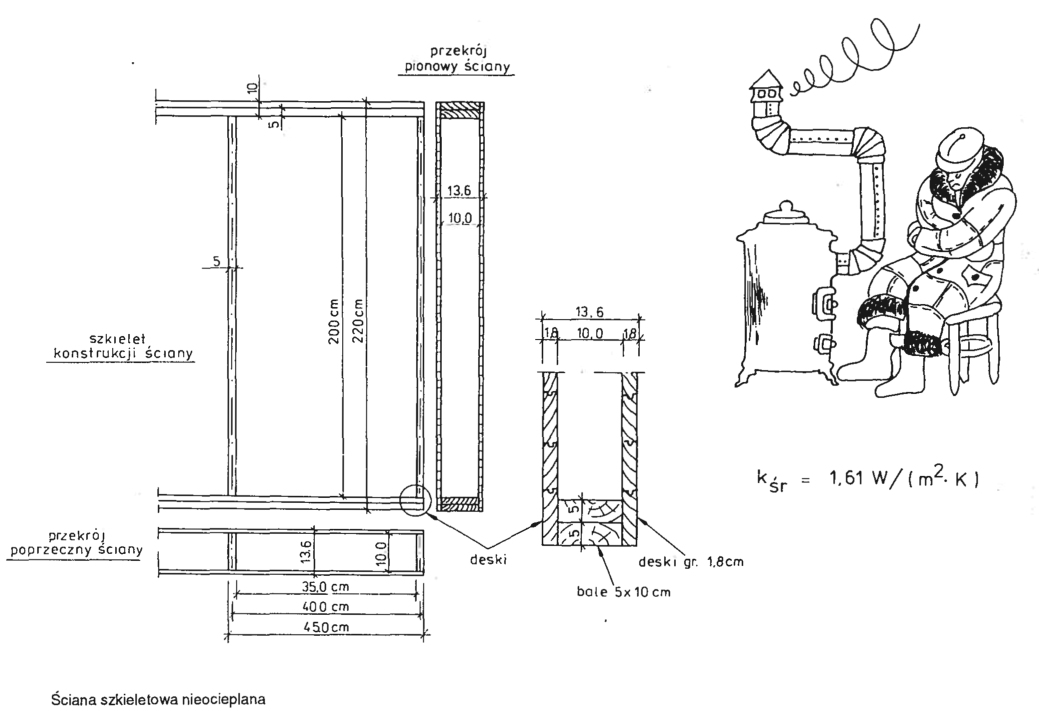 The best of these walls have double decking on each side, with or without the tar paper inside. Houses with roofing felt are quite draft-proof, but in terms of thermal insulation – worse than houses made of logs or beams.
The wall performs the same tasks as the garment on the man, but it cannot be changed as easily as clothes in the event of a change of weather. The same wall must serve us in winter, in the fall, in spring and summer. In our country, it must protect us from driving rain (mostly western), as well as against significant outside temperature differences.
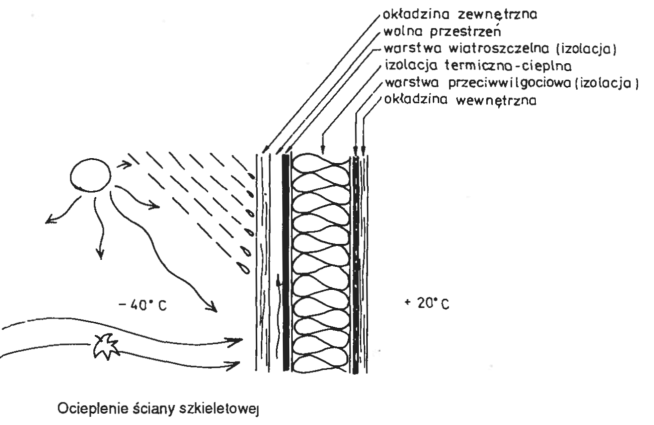 And the temperature can be -30 ° C at times, and +30″C (on the surface of a dark-colored wall can be even higher). The indoor climate should be rather constant. To ensure a constant temperature in the rooms during the heating period, we must bring energy in one form or another in order to warm them. The sun gives us energy for free, but we also get heat by cooking food and lighting up rooms, and a certain amount of it is also generated by people staying at home.
